


What Is Qurban in Islam and How Is Qurban Defined?
As a religious term, the question of what qurban is refers to specific kinds of animals slaughtered with the intention of worship and of drawing near to Allah on the tenth, eleventh and twelfth days of the month of Dhu al-Hijjah, and on the eleventh and twelfth nights. At the heart of this act of worship lie submission to the command of Allah and the longing to draw closer to Him.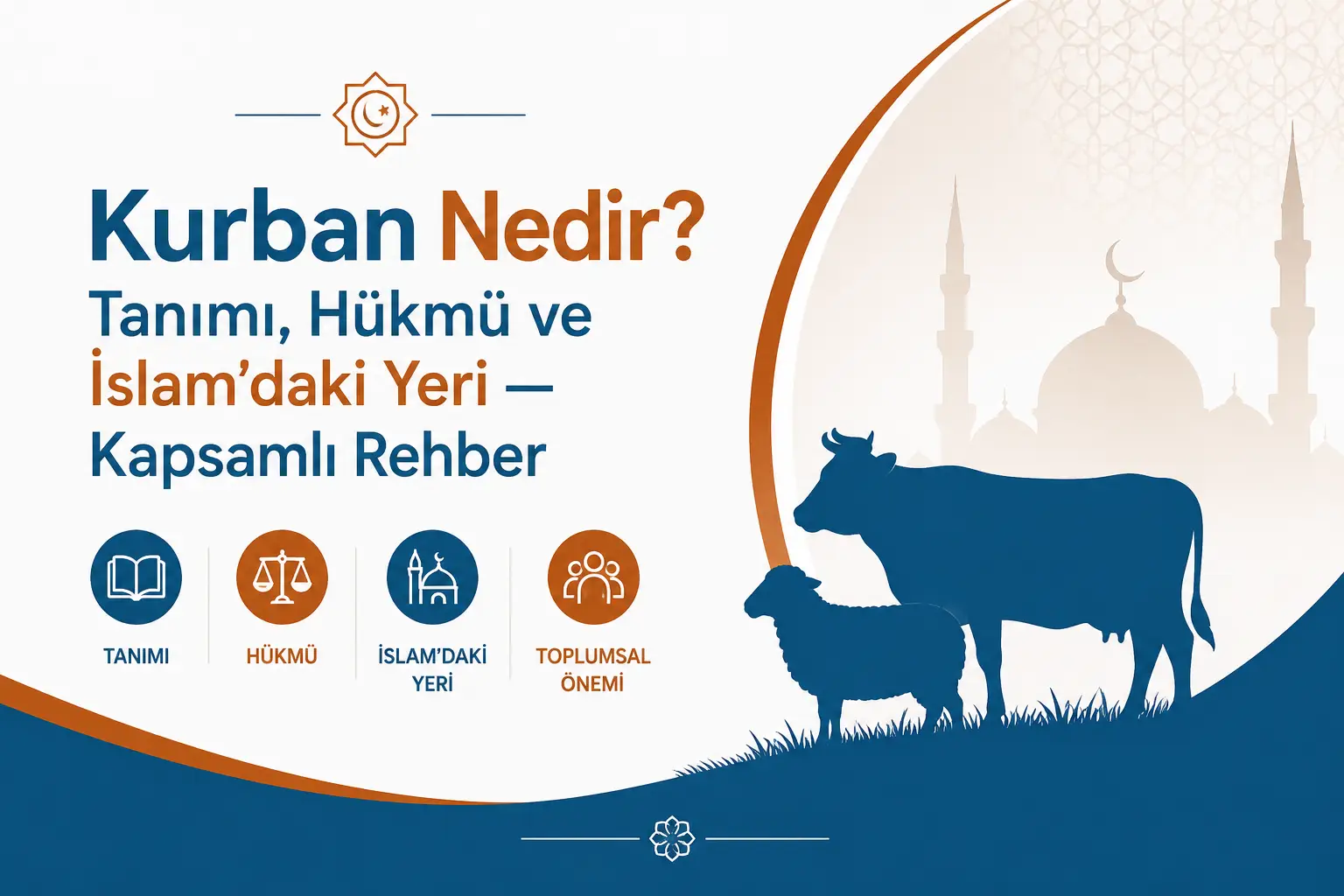
- Sheep and Goat: Must have completed at least one year of age.
- Cattle and Buffalo (Jāmūs): Must have completed two years of age.
- Camel: Must have completed five years of age.
The Ruling on Qurban: Is Offering a Sacrifice Wajib?
According to Islamic law, the ruling on qurban is that it is wajib (necessary). Every free, resident Muslim who, after their essential and basic needs and their debts, possesses wealth to the amount of the nisab is required to offer a sacrifice once a year. It is stated that this act of worship is a religious obligation for every individual who has the means.The Spiritual Responsibility of Not Offering a Sacrifice
Serious warnings have been given by our Prophet (peace and blessings be upon him) concerning those who do not offer a sacrifice even though they have the means. In a noble hadith, the situation of those who are able to sacrifice yet do not do so is expressed as follows:ArabicIt has further been warned that those who abandon this duty may be deprived of that great glad tiding, with the words, “They shall not attain our intercession.” This shows just how important the answer to the question is qurban wajib truly is.مَنْ وَجَدَ سَعَةً وَلَمْ يُضَحِّ فَلَا يَقْرَبَنَّ مُصَلَّانَا
Meaning“Whoever has the means to offer a sacrifice but does not do so, let him not come near our place of prayer (that is, near us).”
The Place and Wisdom of Qurban in Islam
The qurban has been enjoined — without distinction of old or young, man or woman — so that it may be a means of reward on the Day of Gathering. This act of worship is fulfilled only by slaughtering an animal that bears the qualities suitable for sacrifice and by the shedding of its blood. Giving its monetary value as charity does not discharge the obligation of offering the sacrifice within its appointed time.Frequently Asked Questions
On which days is the qurban slaughtered?
The qurban may be slaughtered from dawn on the tenth day of Dhu al-Hijjah until before sunset on the twelfth day (the first, second and third days of Eid al-Adha). It is not permissible to slaughter the sacrifice after sunset on the twelfth day.In a city — that is, in places where the conditions for the Friday and Eid prayers are present — it is a condition that the Eid prayer be performed before the qurban is slaughtered on the tenth day of Dhu al-Hijjah. In a place where the conditions for the Friday and Eid prayers are not present, it is permissible to slaughter the sacrifice after dawn on the first day of Eid. In this matter, what is taken into account is not the locality where the owner is, but the place where the sacrificial animal is. Because of the possibility of error in the dark, slaughtering the sacrifice at night is mildly disliked (makruh tanzihi).
For whom is offering a sacrifice obligatory (wajib)?
Offering a sacrifice is wajib for every free, resident (non-travelling) Muslim man and woman who is wealthy to the degree that the sadaqat al-fitr (fitrah) becomes obligatory upon them. It is not wajib for a traveller (one who has set out to cover a distance of at least 90 km); however, it is permissible if offered voluntarily (nafilah).The nisab for qurban is to possess, after one’s essential and basic needs (house, household goods, a mount, three sets of clothing, one year’s provision) and one’s debts, 80.14 g of gold or other property of equal value. Unlike the nisab for zakat, it is not a condition that this property be of a kind that grows through trade, nor that a full year pass over it.
Which animals may be sacrificed, and what must their ages be?
The animals specific to sacrifice are of five kinds: sheep, goat, cattle, buffalo (jāmūs) and camel. It is a condition that these animals have completed a certain age:
- Sheep and goat: one year old. (If a lamb is large and cannot be distinguished from a one-year-old sheep, it too may be sacrificed once it completes six months.)
- Cattle and buffalo (jāmūs): two years old.
- Camel: five years old.
Information Note: İla Association provides information about performing the act of qurban in accordance with its fiqh and about its social activities in this field. For detailed information, you may visit https://multi.iladernegi.org/en/kurban/.